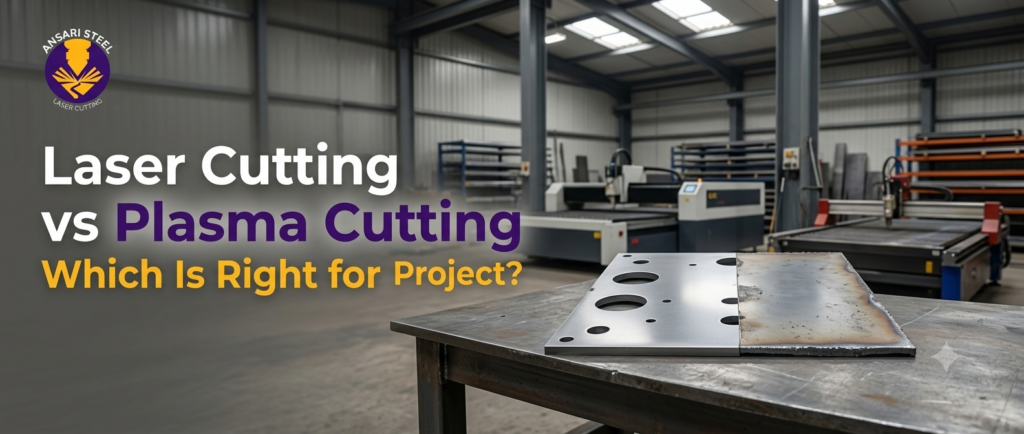
When planning a Metal Fabrication project, one of the biggest decisions is choosing the right cutting method. Whether you are manufacturing machine parts, fabricating structural steel, producing decorative metalwork, or building industrial equipment, the cutting process directly affects quality, production time, and overall cost. That is why many businesses compare laser cutting vs plasma cutting before placing an order.
Across Karachi, industries such as construction, engineering, manufacturing, and industrial fabrication rely on advanced cutting technologies to produce accurate metal components. However, not every project requires the same process. Some jobs demand exceptional precision, while others prioritize cutting speed or lower production costs.
Understanding the differences between these technologies helps businesses choose the most suitable solution while avoiding unnecessary expenses and production delays. This guide explains how laser and plasma cutting work, where each method performs best, what influences pricing, and how to decide which option matches your project requirements.
Which Cutting Method Should You Choose?
If your project requires extremely accurate cuts, clean edges, and intricate designs, laser cutting is generally the better choice. If you are processing thicker steel sections where speed and affordability are more important than fine detail, plasma cutting may be the more practical solution.
The right decision depends on material type, thickness, production volume, finishing requirements, and budget.
What You Will Learn
Introduction
Laser cutting and plasma cutting explained
Key differences between the two methods
Materials each process can handle
Where each technology performs best
Cost considerations
How to choose the right service provider
Frequently asked questions
Final recommendations
Why Are So Many Businesses Comparing These Two Technologies?
As manufacturing technology has advanced, businesses now have more cutting options than ever before. Both laser and plasma cutting have become widely available through professional fabrication companies, making it important for buyers to understand their advantages before investing in production.
Construction contractors, fabrication workshops, machinery manufacturers, and engineering firms all face the same question. Which process provides the best balance of quality, efficiency, and cost?
The answer depends entirely on the project.
See the Difference with Ansari steel
Modern fabrication companies often provide both laser and plasma cutting because each technology serves a different purpose.
Experienced manufacturers such as Ansari steel evaluate material thickness, dimensional accuracy, production quantity, and finishing requirements before recommending the most suitable process. This ensures customers receive the right balance of performance and value rather than paying for capabilities they may not actually need.
How Laser Cutting Works
Laser cutting uses an extremely concentrated beam of light to melt or vaporize metal along a digitally programmed path. The machine follows CAD drawings with exceptional precision while assist gases remove molten material from the cutting area.
Because the cutting beam is extremely narrow, laser machines produce highly detailed components with smooth edges and minimal material waste.
Businesses searching for laser cutting services Karachi often choose this process when manufacturing products that require tight tolerances and clean finishes.
Laser cutting is particularly effective for decorative metalwork, electrical panels, precision engineering components, signage, architectural features, and custom fabricated products.
How Plasma Cutting Works
Plasma cutting operates differently. Instead of using a laser beam, the machine generates an extremely hot, electrically charged plasma arc capable of melting conductive metals.
The molten material is immediately blown away by high pressure gas, producing the required cut.
Businesses requiring plasma cutting services Karachi frequently choose this technology for structural steel fabrication, industrial equipment, heavy machinery, and construction projects involving thicker materials.
Plasma systems generally cut faster through heavy steel than laser machines, although they produce wider cut widths and rougher edges.
Comparing Accuracy, Speed, and Finish
One of the biggest differences between laser and plasma cutting is cutting precision.
Laser cutting delivers exceptional dimensional accuracy, allowing manufacturers to create intricate shapes, small holes, and detailed patterns with minimal finishing work.
Plasma cutting focuses more on productivity when processing thicker materials. Although it cuts quickly, additional grinding or finishing may be required depending on project requirements.
For projects where appearance matters, laser cutting usually produces superior results.
For heavy industrial fabrication where decorative quality is less important, plasma cutting remains an excellent option.
Which Materials Can Each Process Cut?
Both technologies work with conductive metals, but their performance varies depending on thickness and application.
Common materials include:
- Mild steel
- Stainless steel
- Aluminium
- Galvanized steel
- Carbon steel
Laser cutting generally performs better on thinner materials requiring precision.
Plasma cutting is often preferred for heavier steel sections where production speed becomes more important than fine detail.
Why Precision Matters in Modern Manufacturing
Precision Solutions by Ansari steel
Today’s engineering projects require components that fit together accurately during assembly. Even small dimensional errors can increase installation time, create alignment issues, and lead to additional manufacturing costs.
Professional fabrication companies invest in advanced CNC equipment to maintain consistent quality throughout every production run.
Businesses working with Ansari steel benefit from manufacturing processes designed to improve accuracy, reduce waste, and simplify downstream fabrication such as welding, bending, and assembly.
What Affects Cutting Costs?
Several factors influence project pricing regardless of the cutting technology selected.
Material type.
Material thickness.
Cutting complexity.
Production quantity.
Machine operating time.
Required edge quality.
Additional fabrication processes.
Projects requiring highly detailed components generally benefit from laser cutting despite the higher equipment investment.
Projects involving thicker structural steel often achieve better overall value using plasma cutting.
Both methods remain highly effective when matched correctly to the intended application.
Make the Right Choice with Ansari steel
Choosing between laser and plasma cutting should always be based on the technical requirements of your project rather than simply selecting the lowest quotation. Material thickness, dimensional accuracy, production volume, and finishing expectations all influence which process will deliver the best long term value.
Professional fabrication companies assess these factors before recommending a solution. Experienced manufacturers such as Ansari steel help customers select the most efficient cutting process while reducing unnecessary production costs and maintaining consistent product quality.
How to Decide Which Cutting Method Fits Your Project
Before approving any fabrication work, consider the purpose of the finished product.
If your project involves decorative metal panels, precision brackets, electrical enclosures, machinery parts, or components requiring tight tolerances, laser cutting is generally the preferred option.
If the project includes heavy structural steel, industrial support frames, thick plates, or large construction components, plasma cutting often provides a faster and more economical solution.
The correct choice depends on balancing precision, production speed, and overall project cost.
What Happens During the Cutting Process?
Although laser and plasma machines operate differently, both follow a similar production workflow.
Design Preparation
Engineers prepare CAD drawings or digital files that define every cut, hole, and profile.
Material Selection
The appropriate steel or metal sheet is selected according to project requirements.
Machine Programming
The digital design is transferred to the CNC control system, allowing the machine to follow highly accurate cutting paths.
Cutting Operation
The selected technology performs the cutting process while maintaining dimensional accuracy and minimizing material waste.
Inspection and Secondary Fabrication
Finished components are inspected before moving to welding, bending, machining, painting, or assembly where required.
A structured manufacturing process helps maintain quality and reduces production errors.
Professional Advice Before Choosing a Cutting Company
Selecting an experienced fabrication company is just as important as selecting the right cutting technology.
Look for modern CNC equipment.
Review completed industrial projects.
Ask about material capabilities.
Confirm dimensional accuracy standards.
Discuss production timelines.
Request detailed quotations based on technical specifications.
An experienced provider of CNC metal cutting Karachi services should also be able to explain why one cutting process is better suited to your project than another.
Best Practices for Better Results
Proper planning helps improve manufacturing quality and reduce unnecessary costs.
Provide accurate engineering drawings whenever possible.
Select materials based on performance rather than price alone.
Discuss finishing requirements before production begins.
Allow realistic production schedules for larger projects.
Confirm required tolerances before manufacturing starts.
These simple practices improve efficiency while reducing the risk of production delays.
Common Mistakes Buyers Should Avoid
Many customers make avoidable mistakes when comparing cutting methods.
Some of the most common include:
- Choosing solely on price instead of quality.
- Selecting plasma cutting for projects requiring extremely fine detail.
- Choosing laser cutting for very thick materials without evaluating alternatives.
- Providing incomplete drawings.
- Ignoring finishing requirements.
- Failing to discuss material specifications before production.
Avoiding these mistakes can save significant time and manufacturing costs.
Advantages and Practical Limitations
Both technologies offer clear advantages depending on the application.
Laser cutting provides exceptional precision, smooth edges, minimal material waste, and excellent repeatability.
Plasma cutting offers faster processing of thicker conductive metals and generally lower operating costs for heavy fabrication.
However, laser cutting equipment involves higher investment, while plasma cutting may require additional finishing for projects demanding decorative quality.
Understanding these strengths and limitations helps businesses make informed production decisions.
Where Laser and Plasma Cutting Are Used
Both technologies support numerous industries across Karachi.
Construction companies use plasma cutting for heavy structural steel fabrication.
Manufacturers rely on laser cutting for precision machine components.
Engineering firms require accurately cut parts for industrial equipment.
Architectural companies use laser cutting to create decorative metal screens, railings, and signage.
Fabrication workshops combine both processes depending on the complexity and thickness of each project.
Industry Trends in Pakistan
Industrial manufacturing continues to adopt more advanced fabrication technologies as businesses seek greater efficiency and improved product quality.
Fiber laser systems are becoming increasingly popular because they provide faster cutting speeds, lower maintenance requirements, and improved energy efficiency.
At the same time, plasma cutting remains an essential solution for heavy industrial applications where productivity and material thickness are the primary considerations.
Businesses working with experienced manufacturers such as Ansari steel benefit from access to multiple fabrication technologies, allowing each project to be matched with the most suitable manufacturing process.
Final Thoughts
The comparison between laser cutting vs plasma cutting is not about determining which technology is universally superior. Instead, it is about selecting the process that best matches your project’s technical requirements, budget, material thickness, and quality expectations.
Laser cutting remains the preferred choice for precision manufacturing and decorative fabrication, while plasma cutting continues to provide outstanding value for heavy industrial steel fabrication.
Understanding these differences allows businesses to achieve better quality, lower production costs, and more efficient project completion.