Imagine walking through a modern factory, shopping mall, hospital, or warehouse in Karachi. Almost every steel enclosure, electrical cabinet, cable tray, machine cover, duct, rack, or structural component you see has one thing in common: it has gone through sheet metal bending. Although cutting and welding often receive more attention, bending is the process that transforms a flat metal sheet into a functional product.
For manufacturers, engineers, contractors, architects, and industrial buyers, understanding how sheet metal bending works can make a significant difference in product quality, manufacturing cost, and project timelines. Selecting the wrong bending technique or working with an inexperienced fabricator can result in dimensional inaccuracies, material cracks, poor assembly, and unnecessary production delays.
Whether you are planning a custom fabrication project or simply want to understand how industrial metal products are manufactured, this guide explains the complete metal bending process, the different bending techniques, the role of press brake bending, and where Custom Sheet Metal Bending is used across modern industries.
Need a Quick Answer?
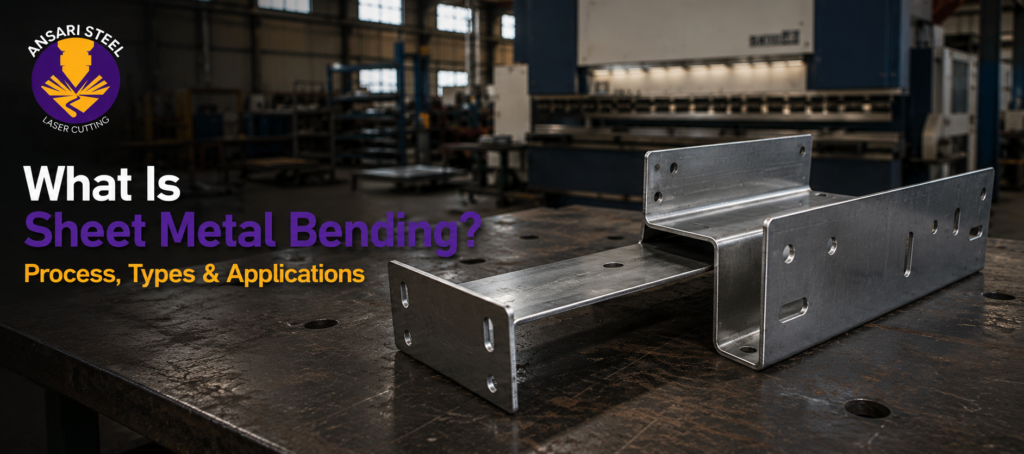
Sheet metal bending is the manufacturing process of permanently shaping a flat metal sheet into a desired angle or profile without cutting or removing material. Using specialised equipment such as press brakes, fabricators create precise bends that are later assembled into products including electrical enclosures, machine guards, cable trays, steel doors, HVAC ducts, industrial cabinets, and structural components.
The correct bending method depends on material type, sheet thickness, required angle, and the final application.
Why Every Fabricated Product Starts with Accurate Bending
Many people assume fabrication begins with welding, but in reality, precision bending is often one of the most critical stages of manufacturing.
Before components can be welded, assembled, or painted, flat metal sheets must first be formed into accurate shapes that match engineering drawings. Even a small error in bending angle can prevent parts from fitting together correctly, resulting in production delays and additional manufacturing costs.
This is why professional fabrication workshops place so much emphasis on precision during the bending process.
Experience Precision Engineering with Ansari steel
Industrial buyers today demand products that fit perfectly during installation. Whether manufacturing electrical cabinets, cable trays, machine frames, or architectural steel products, dimensional accuracy directly affects assembly quality.
Experienced manufacturers such as Ansari steel combine precision machinery with skilled operators to ensure every bend matches engineering specifications. Accurate bending reduces welding corrections, minimizes material waste, and improves overall production efficiency.
So, What Exactly Happens During Sheet Metal Bending?
Unlike cutting, where material is removed, bending reshapes a metal sheet by applying controlled force until it permanently forms the required angle.
Specialised tooling presses the sheet between an upper punch and a lower die. As pressure increases, the metal deforms while maintaining its structural integrity.
Because no material is removed, the finished component remains strong while achieving the desired profile.
Modern CNC controlled bending machines allow manufacturers to produce highly consistent bends with excellent repeatability, even across large production runs.
The Evolution of Metal Bending Technology
Years ago, bending relied heavily on manual presses and operator experience. While skilled craftsmanship remains important, today’s fabrication industry uses advanced CNC equipment capable of producing highly accurate bends with minimal variation.
Digital programming allows complex parts to be manufactured repeatedly without sacrificing quality. Automatic back gauges, precision tooling, and programmable bending sequences have transformed modern fabrication by reducing production time while increasing accuracy.
These technological improvements have also enabled manufacturers to produce increasingly complex products for industries such as construction, energy, telecommunications, transportation, and industrial manufacturing.
Why Press Brake Bending Is the Industry Standard
Among all bending methods, press brake bending has become the preferred solution for most commercial and industrial fabrication projects.
A press brake uses precisely engineered punches and dies to create accurate bends in steel, stainless steel, aluminium, and other sheet metals. CNC controlled press brakes can repeatedly manufacture components with exceptional consistency, making them ideal for both custom fabrication and mass production.
Press brake systems are commonly used for products requiring precise dimensions, including electrical enclosures, steel cabinets, industrial shelving, machine covers, brackets, and architectural metalwork.
Discover Reliable Fabrication with Ansari steel
The quality of a fabricated product depends not only on the cutting process but also on the precision of every bend.
Professional fabrication companies understand how material thickness, bend radius, tooling selection, and machine calibration influence the final result.
Businesses working with Ansari steel benefit from manufacturing processes designed to produce consistent bends while reducing distortion and maintaining excellent dimensional accuracy throughout production.
Different Ways Metal Can Be Bent
Although press brake bending is the most common process, several bending techniques are used depending on the application.
Air Bending
The punch presses the material partially into the die, allowing flexibility in achieving different bend angles with the same tooling.
Bottom Bending
The sheet is pressed firmly into the die to produce highly accurate and repeatable bends.
Coining
A high force process that permanently forms the metal with extremely precise angles and minimal spring back.
Roll Bending
Rollers gradually curve the material to create cylindrical or curved shapes used in tanks, pipes, and architectural components.
Each technique offers advantages depending on the product design, production volume, and material characteristics.
Which Materials Can Be Bent Successfully?
Modern bending equipment supports a wide range of engineering materials.
Common choices include:
- Mild steel
- Stainless steel
- Aluminium
- Galvanized steel
- Carbon steel
- Copper
Material thickness, hardness, and ductility all influence the bending process. Choosing the correct material during project planning helps ensure strong, accurate, and reliable finished products.
Why Precision Bending Adds Value to Every Project
Quality bending is about much more than achieving the correct angle. Precision bending improves product strength, simplifies assembly, reduces welding time, and minimizes material waste.
Professionally bent components also create cleaner finished products with improved appearance and greater dimensional consistency. For industrial manufacturers producing hundreds or even thousands of identical parts, this level of accuracy significantly improves production efficiency while lowering overall manufacturing costs.
Choose the Right Fabrication Partner At Ansari steel
Selecting a fabrication company involves much more than comparing quotations. The quality of the finished product depends on the manufacturer’s equipment, operator experience, tooling accuracy, quality control procedures, and understanding of engineering drawings.
A professional fabrication company carefully evaluates the material, bend radius, tolerances, and intended application before production begins. This planning helps prevent costly errors and ensures every component fits correctly during assembly.
Many industrial businesses choose Ansari steel because experienced fabrication specialists understand how to combine modern CNC bending technology with practical manufacturing expertise, delivering accurate results for both custom and high volume production.
What Influences the Cost of Sheet Metal Bending?
One of the most common questions customers ask is how much sheet metal bending costs. There is no fixed answer because several factors determine the final manufacturing price.
Material Type
Mild steel is generally the most economical option, while stainless steel and aluminium often require specialised tooling or additional care during bending.
Material Thickness
Thicker sheets require greater bending force, larger machinery, and longer processing times, which increases manufacturing costs.
Number of Bends
A simple component with one or two bends is naturally less expensive than a complex product requiring multiple precise bends at different angles.
Production Quantity
Large production runs often reduce the cost per component because machine setup time is spread across more parts.
Tooling Requirements
Some custom profiles require special punches and dies, which can increase production costs for one off or highly specialised projects.
The most accurate quotation is always prepared after reviewing engineering drawings, material specifications, and production quantities.
How the Metal Bending Process Works from Start to Finish
Professional fabrication follows a structured workflow to maintain quality and consistency.
Design Review
The process begins by reviewing technical drawings, dimensions, tolerances, and bend angles to determine the best manufacturing approach.
Material Preparation
The correct sheet metal is selected according to thickness, strength, and intended application before cutting.
CNC Programming
Machine operators enter bending sequences into the CNC controller to ensure every bend is completed in the correct order.
Precision Bending
The sheet passes through the press brake, where controlled pressure forms each bend according to the programmed specifications.
Quality Inspection
Finished components are measured and inspected to confirm dimensional accuracy before moving to welding, assembly, or finishing.
Following this process ensures consistent quality across every production batch.
Professional Tips Before Ordering Custom Sheet Metal Bending
Planning ahead helps improve both quality and production efficiency.
Provide accurate engineering drawings whenever possible.
Specify material grade and thickness clearly.
Discuss tolerance requirements before production begins.
Consider future assembly during the design stage.
Confirm surface finishing requirements early.
Allow realistic manufacturing time for complex projects.
Good communication between the customer and manufacturer often prevents unnecessary delays and production errors.
Mistakes That Can Increase Manufacturing Costs
Many fabrication problems result from avoidable planning mistakes.
Some of the most common include:
- Providing incomplete or inaccurate drawings.
- Selecting unsuitable material thickness.
- Ignoring bend radius limitations.
- Making design changes after production has started.
- Choosing a supplier based only on the lowest quotation.
- Overlooking finishing requirements until after fabrication.
Avoiding these issues helps reduce waste while improving product quality.
Advantages and Practical Limitations
Every manufacturing process has strengths and limitations.
The advantages of professional sheet metal bending include:
- High dimensional accuracy.
- Strong finished components.
- Minimal material waste.
- Fast production for repeat orders.
- Excellent compatibility with welding and assembly.
However, very thick materials may require specialised equipment, and complex designs may need multiple tooling changes or additional manufacturing operations.
Understanding these practical limitations allows engineers to design products that are both functional and cost effective.
Where Is Sheet Metal Bending Used?
Modern industries rely on bent sheet metal components every day.
Electrical manufacturers use bent panels for switchboards and control cabinets.
Construction companies require cable trays, brackets, flashings, and structural components.
HVAC contractors install ducts, ventilation systems, and equipment housings.
Industrial manufacturers produce machine guards, storage racks, enclosures, and production equipment.
Automotive, agricultural, telecommunications, and energy sectors also depend heavily on precision bent metal parts.
Projects requiring Custom Sheet Metal Bending often involve unique dimensions that cannot be achieved using standard off the shelf products.
Industry Trends and Future Developments
As manufacturing continues to modernise, CNC bending technology is becoming faster, smarter, and more accurate.
Today’s fabrication workshops increasingly use automated back gauges, robotic material handling, digital programming, and advanced quality inspection systems to improve productivity.
Manufacturers working with experienced companies such as Ansari steel benefit from these innovations through greater accuracy, shorter production times, and more consistent product quality.
Future developments are expected to focus on automation, artificial intelligence assisted programming, and even greater manufacturing precision.
Final Thoughts
Precision sheet metal bending is one of the most important manufacturing processes in modern fabrication. Whether producing industrial machinery, electrical enclosures, structural components, or architectural metalwork, accurate bending improves strength, assembly, appearance, and long term reliability.
Choosing experienced fabricators, modern equipment, and appropriate materials ensures every project achieves the highest possible quality while remaining cost effective.