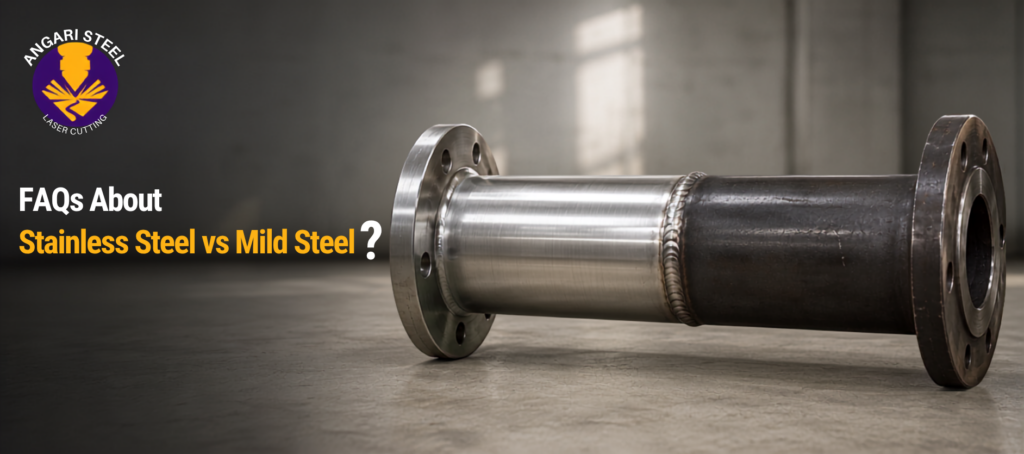
Choosing between stainless steel vs mild steel depends on your budget, application, and long term performance requirements. Understanding the Difference Between Stainless Steel and Mild Steel helps you select the right material for fabrication, construction, or manufacturing projects. Many buyers also compare Which Is Better Stainless Steel or Mild Steel before making a purchase. Ansari Steel has answered the most common questions to help you make a confident and informed decision.
FAQs About Stainless Steel vs Mild Steel
The answer depends on your project requirements. Stainless steel is ideal for corrosion resistance and hygiene, while mild steel offers excellent strength at a lower cost. Ansari Steel can help you choose the most suitable material based on your application and budget.
The main difference is that stainless steel contains chromium, which protects it from rust and corrosion, while mild steel contains more carbon and usually requires protective coatings. Both materials have different strengths and are suited to different applications.
Although stainless steel has a higher initial cost, it often requires less maintenance and lasts longer in demanding environments. Ansari Steel can help you compare material performance and costs to determine which option offers the best value for your project.
The Stainless Steel vs Mild Steel Cost difference is influenced by raw material prices, alloy content, and manufacturing processes. Mild steel is generally more affordable, while stainless steel offers greater durability and corrosion resistance.
Stainless steel is commonly used in food processing, medical equipment, marine applications, and architectural projects. Mild steel is widely used in construction, structural fabrication, machinery, and general engineering. Ansari Steel can recommend the right material for your industry and operating environment.
Strength depends on the specific grade and application. Mild steel generally has excellent structural strength, while many stainless steel grades provide high strength along with superior resistance to corrosion and wear.
Yes. Mild steel can rust when exposed to moisture if it is not properly coated or protected. Stainless steel naturally resists corrosion because of its chromium content, making it suitable for harsh environments.
Yes. Both materials can be cut, welded, bent, and fabricated using appropriate techniques. The fabrication process and welding method may vary depending on the material grade and the desired finish.
Consider factors such as budget, exposure to moisture, maintenance requirements, appearance, and expected service life. Matching the material to the operating environment will help achieve better long term performance.
Check the material grade, thickness, quality standards, intended application, and supplier reputation before making a purchase. Comparing these factors will help you choose the right steel for both performance and value.