
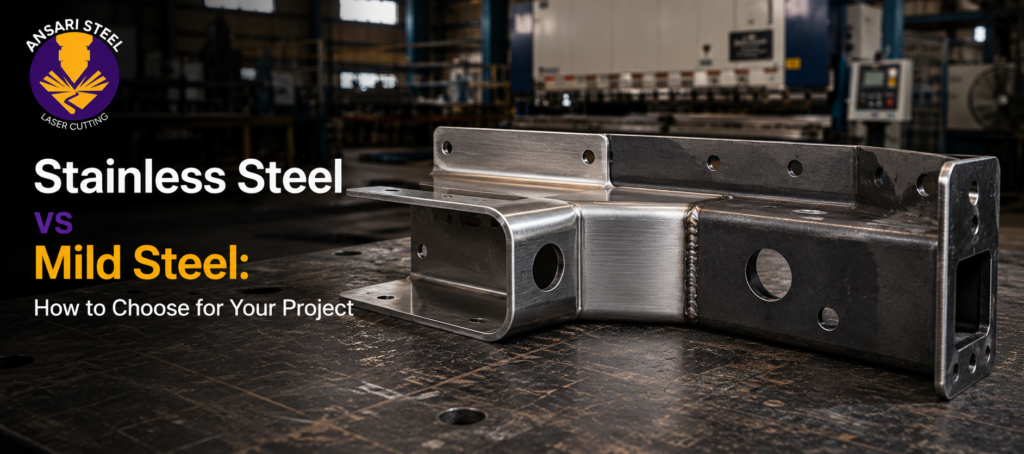
Choosing the right metal is one of the most important decisions in any fabrication or construction project. Whether you are manufacturing machinery, building a warehouse, fabricating steel doors, installing cable trays, or producing architectural features, the material you select directly affects strength, durability, maintenance, and long term cost.
One of the most common questions asked by engineers, contractors, workshop owners, and industrial buyers is stainless steel vs mild steel. Although both materials are widely used across Pakistan, they are designed for different purposes and perform differently under varying conditions.
Selecting the wrong material can lead to unnecessary maintenance expenses, corrosion problems, or paying more than your project actually requires. Understanding the Difference Between Stainless Steel and Mild Steel allows buyers to make informed decisions based on performance instead of assumptions.
This guide explains how both materials differ, where each performs best, what influences cost, and how to decide which option is the right investment for your project.
Looking for a Quick Answer?
If your project requires excellent corrosion resistance, hygiene, and long service life with minimal maintenance, stainless steel is usually the better option. If strength, affordability, and ease of fabrication are your priorities, mild steel often provides better value.
The right choice depends on where the product will be used, environmental conditions, structural requirements, and available budget.
Why This Comparison Matters More Than Ever
Across Karachi, industrial projects continue to grow in size and complexity. Fabrication companies, builders, and manufacturers are expected to deliver products that perform reliably while remaining cost effective.
Whether fabricating industrial machinery, structural steel, commercial kitchens, storage tanks, or architectural metalwork, selecting the correct material at the beginning often prevents expensive repairs and replacements later.
A site engineer ordering hundreds of fabricated brackets for a coastal project, for example, would make a very different material choice than someone manufacturing indoor warehouse shelving. The environment changes everything.
Build Smarter Projects with Ansari steel
Experienced fabricators know that there is no universal “best metal.” Every project must balance strength, corrosion resistance, appearance, fabrication requirements, and budget.
Professional manufacturers such as Ansari steel evaluate these factors before recommending a material, helping customers avoid unnecessary costs while ensuring the finished product performs reliably throughout its service life.
What Is Mild Steel?
Mild steel is a low carbon steel widely used throughout construction and industrial manufacturing. It is valued for its excellent strength, affordability, weldability, and versatility.
Because it is relatively easy to cut, bend, machine, and weld, mild steel has become the standard material for countless fabrication projects.
Typical applications include:
- Structural steel
- Industrial frameworks
- Gates and railings
- Machinery
- Storage racks
- Steel furniture
- Construction components
When properly painted or coated, mild steel provides excellent service in many indoor and controlled environments.
What Makes Stainless Steel Different?
Discover Material Expertise with Ansari steel
Stainless steel contains chromium, which creates a protective oxide layer that resists rust and corrosion. This natural protection makes it highly suitable for demanding environments where moisture, chemicals, or frequent cleaning are common.
Unlike painted mild steel, stainless steel does not rely solely on surface coatings for protection.
Businesses working with Ansari steel frequently select stainless steel for projects requiring durability, hygiene, attractive appearance, and low maintenance over many years.
Common applications include food processing equipment, pharmaceutical manufacturing, hospitals, laboratories, commercial kitchens, water treatment facilities, and decorative architectural products.
Stainless Steel vs Mild Steel at a Glance
| Feature | Stainless Steel | Mild Steel |
| Corrosion Resistance | Excellent | Requires protective coating |
| Initial Cost | Higher | Lower |
| Maintenance | Low | Moderate |
| Strength | High | High |
| Appearance | Premium finish | Usually painted or coated |
| Weldability | Excellent with correct process | Excellent |
| Typical Use | Food, medical, marine, architectural | Construction, machinery, structural fabrication |
The table highlights why material selection depends on the intended application rather than one material simply being better than the other.
Which Material Is Stronger?
Many people assume stainless steel is always stronger because it costs more. In reality, strength depends on the specific grade and application.
Mild steel offers excellent structural strength and is commonly used in buildings, industrial equipment, and heavy fabrication.
Stainless steel also provides high strength while offering superior corrosion resistance. For projects exposed to moisture, chemicals, or outdoor environments, its ability to resist rust often makes it the more practical long term choice.
Where Each Material Performs Best
Choosing the right material becomes much easier when considering the working environment.
Mild steel is ideal for structural fabrication, industrial machinery, warehouse equipment, machine frames, and indoor commercial projects.
Stainless steel performs exceptionally well in coastal environments, food production facilities, pharmaceutical plants, hospitals, laboratories, restaurants, and decorative architectural installations.
Understanding the working environment is often more important than comparing price alone.
Why Fabricators Consider More Than Material Cost
Reliable Fabrication Solutions from Ansari steel
Professional fabrication companies evaluate much more than raw material prices before making recommendations.
Manufacturing complexity, welding requirements, finishing methods, maintenance expectations, and product lifespan all influence the overall value of a project.
Experienced teams at Ansari steel understand that investing slightly more in the correct material today can significantly reduce maintenance costs and replacement expenses over the coming years.
What Influences Material Pricing?
One of the most frequently searched topics is Stainless Steel vs Mild Steel Cost.
Several factors influence pricing, including:
- Material grade.
- Market steel prices.
- Thickness.
- Quantity required.
- Surface finish.
- Fabrication complexity.
Although stainless steel has a higher purchase price, its reduced maintenance and longer lifespan may provide better value for many industrial applications.
How to Decide Which Material Fits Your Project
Choosing between stainless steel and mild steel should never be based on price alone. A well planned project considers the working environment, expected lifespan, maintenance requirements, appearance, and structural performance before selecting a material.
If the fabricated product will remain indoors in a dry environment, mild steel is often the most economical solution. However, if the product will be exposed to moisture, chemicals, frequent washing, or coastal weather, stainless steel may prove to be the better long term investment.
Before approving production, ask yourself a few practical questions.
Will the product be installed indoors or outdoors?
Will it be exposed to water or chemicals?
Does appearance matter?
Is regular maintenance acceptable?
How long should the product last?
Answering these questions usually makes the material choice much clearer.
Make Better Material Decisions with Ansari steel
Professional fabricators understand that every project has different engineering priorities. A staircase inside a warehouse, for example, requires different material characteristics than a commercial kitchen countertop or a pharmaceutical production table.
Experienced manufacturers such as Ansari steel assess project drawings, operating conditions, fabrication methods, and customer budgets before recommending the most suitable material. This approach helps prevent unnecessary spending while ensuring long term reliability.
From Raw Material to Finished Product
Whether mild steel or stainless steel is selected, the manufacturing process follows several important stages.
Material Selection
The appropriate steel grade is chosen according to engineering specifications, corrosion requirements, and intended application.
Cutting
Steel sheets, plates, or structural sections are accurately cut using laser cutting, plasma cutting, or other precision fabrication methods.
Forming
Components are bent, rolled, or shaped into the required profiles before assembly.
Welding
Qualified fabricators join individual components using suitable welding processes based on the selected material.
Finishing
Mild steel products are commonly painted, powder coated, or galvanised, while stainless steel may be polished or brushed depending on the desired appearance.
Quality Inspection
Every finished product should be inspected for dimensional accuracy, weld quality, and overall workmanship before delivery.
Best Practices Before Ordering Fabricated Steel Products
Proper planning helps reduce manufacturing problems and unnecessary costs.
Provide accurate engineering drawings.
Choose materials according to the operating environment.
Discuss corrosion protection requirements early.
Confirm surface finish expectations before fabrication begins.
Review quotations carefully rather than comparing price alone.
Allow realistic production schedules for complex projects.
These simple practices improve both manufacturing efficiency and final product quality.
Common Mistakes Buyers Should Avoid
Many businesses spend more than necessary because they choose materials without fully understanding their applications.
Some common mistakes include:
- Choosing stainless steel when mild steel would perform perfectly well.
- Selecting mild steel for permanently exposed coastal environments without suitable protective coatings.
- Ignoring long term maintenance costs.
- Comparing only the initial purchase price.
- Choosing suppliers without reviewing previous fabrication work.
Avoiding these mistakes leads to better value and fewer maintenance issues over the life of the project.
Are There Any Alternatives?
While stainless steel and mild steel are the two most widely used fabrication materials, some projects may benefit from other options.
Aluminium offers lightweight construction and excellent corrosion resistance.
Galvanised steel provides improved protection against rust while remaining more affordable than stainless steel.
Special alloy steels are used where extremely high strength or heat resistance is required.
Each alternative should be evaluated according to the specific engineering requirements of the project.
Where These Materials Are Used Every Day
Both materials are essential across Pakistan’s manufacturing and construction industries.
Mild steel is commonly found in factories, warehouses, bridges, machine frames, storage racks, security gates, industrial structures, and commercial buildings.
Stainless steel is widely used in hospitals, food processing plants, pharmaceutical facilities, hotels, restaurants, laboratories, water treatment plants, and decorative architectural projects.
Selecting the correct material ensures products perform efficiently throughout their intended lifespan.
What the Future Looks Like
As industrial standards continue to improve, businesses are placing greater emphasis on lifecycle cost rather than simply comparing purchase prices.
Modern fabrication companies increasingly recommend materials based on total ownership cost, expected maintenance, and long term performance instead of initial material cost alone.
Advances in fabrication technology, CNC machining, laser cutting, and precision welding are also allowing manufacturers to produce more complex steel products with greater consistency and higher quality than ever before.
Final Thoughts
The debate around stainless steel vs mild steel has no single answer because every fabrication project has different technical and commercial requirements.
Mild steel continues to be the preferred choice for structural fabrication, industrial manufacturing, and projects where affordability is important.
Stainless steel remains the leading solution for applications requiring corrosion resistance, hygiene, attractive appearance, and minimal maintenance.
Understanding the Difference Between Stainless Steel and Mild Steel allows engineers, contractors, manufacturers, and business owners to make informed decisions that improve product performance while delivering better long term value.
Discuss Your Project Before Choosing a Material
If you are planning a fabrication project, consulting experienced professionals before selecting a material can help avoid unnecessary costs and future maintenance problems.
A detailed review of your drawings, application, and operating environment allows the most suitable steel to be selected while balancing performance, durability, and budget.