Understanding sheet metal bending is essential before starting any fabrication or manufacturing project. Whether you want to learn how the metal bending process works or when to use Custom Sheet Metal Bending, knowing the basics helps you choose the right solution for strength, accuracy, and cost efficiency. Ansari Steel has answered the most common questions asked by engineers, contractors, manufacturers, and business owners to help you make informed decisions with confidence.
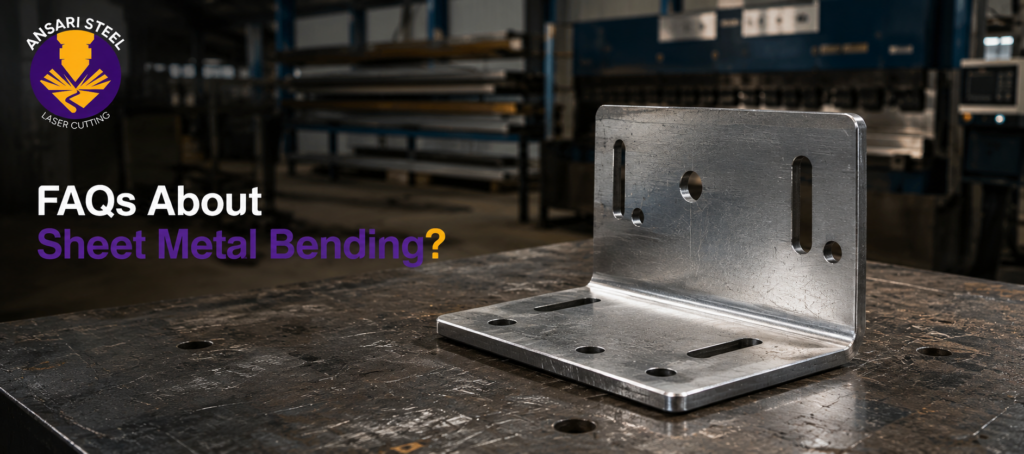
FAQs About Sheet Metal Bending
Sheet metal bending is a manufacturing process that shapes flat metal sheets into precise angles without removing material. It is widely used for producing strong and accurate metal components in many industries. Ansari Steel recommends selecting the right bending method to achieve better quality and long term performance.
The metal bending process uses specialised machinery to apply controlled force and form metal into the required angle or shape. The process delivers consistent accuracy while reducing material waste and production errors.
Press brake bending is a precision forming method that uses a punch and die to create accurate bends in sheet metal. It is ideal for both simple and complex fabrication projects. Ansari Steel often recommends this method for applications that require repeatable precision and high quality finishes.
Common materials include mild steel, stainless steel, aluminium, galvanized steel, brass, and copper. The ideal material depends on factors such as strength, corrosion resistance, product design, and the intended application.
Yes. Custom Sheet Metal Bending allows manufacturers to produce components according to your exact drawings, dimensions, and specifications. Ansari Steel provides customised bending solutions for industrial, commercial, and engineering applications requiring precise fabrication.
The maximum thickness depends on the material type, bending equipment, tooling, and required bend radius. Professional fabrication companies evaluate these factors to achieve accurate bends without damaging the material.
Sheet metal bending is widely used in construction, electrical equipment, automotive manufacturing, HVAC systems, machinery, furniture production, agricultural equipment, and industrial fabrication because it produces durable and accurately formed components.
Most fabrication companies accept engineering files such as DXF, DWG, STEP, and other CAD formats. Accurate design files help ensure precise bending, reduce manufacturing errors, and improve production efficiency.
Production time depends on the material, design complexity, quantity, and finishing requirements. Standard jobs are often completed within a few working days, while custom fabrication projects may require additional manufacturing time.
Choose a company with experienced fabricators, advanced press brake equipment, strict quality control, and a proven portfolio of successful projects. Comparing technical expertise, production capability, and customer feedback helps ensure reliable fabrication results.