
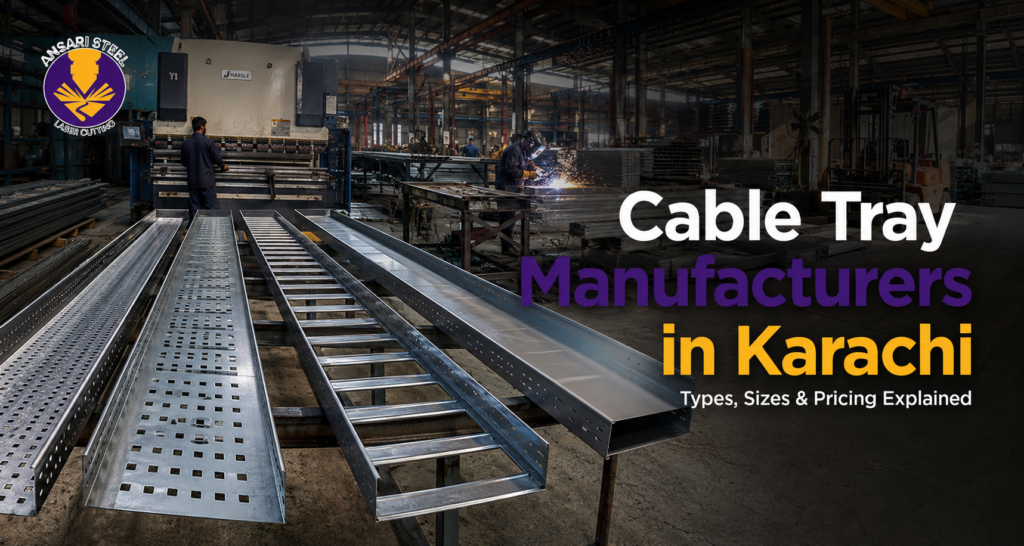
Electrical cable management is a critical part of every commercial, industrial, and infrastructure project. Whether you are constructing a manufacturing facility, office building, shopping mall, hospital, warehouse, or power plant, selecting the right cable tray system directly impacts safety, maintenance, and long term reliability. One of the most common searches among contractors and engineers is finding a reliable cable tray manufacturer in Karachi that offers quality products at competitive prices.
With Karachi serving as Pakistan’s largest industrial and commercial hub, demand for durable cable tray systems continues to grow. Businesses require products that can safely support electrical cables while withstanding heavy loads, environmental conditions, and years of continuous operation.
However, many buyers struggle to understand the differences between cable tray types, available sizes, material options, and pricing. Questions such as “Which cable tray is best?”, “What is the cable tray price in Pakistan?”, and “How do I choose the right manufacturer?” are frequently asked before purchasing.
This guide answers those questions and explains everything you need to know before investing in a cable tray system for your next project.
What Should You Know Before Buying a Cable Tray?
Choosing the right cable tray depends on several factors, including cable load, installation environment, project size, material type, and future maintenance requirements.
A reliable cable tray manufacturer in Karachi will help determine the appropriate tray type, dimensions, finish, and support system according to engineering standards. Selecting the correct solution from the beginning reduces installation costs, improves cable protection, and simplifies future maintenance.
Understanding Cable Tray Systems
Cable trays are structural support systems designed to organize, protect, and route electrical cables throughout buildings and industrial facilities. Instead of placing cables directly on walls or floors, cable trays provide a secure pathway that improves safety, simplifies maintenance, and allows future cable expansion.
Modern cable tray systems are widely used in factories, commercial buildings, data centres, hospitals, educational institutions, power distribution projects, and infrastructure developments.
Compared with traditional conduit systems, cable trays provide easier access during inspections and significantly reduce installation time for large electrical projects.
How Cable Tray Manufacturing Has Advanced
Years ago, cable trays were relatively simple fabricated steel channels intended only for basic cable support. Today, advances in fabrication technology have transformed them into engineered products designed for strength, corrosion resistance, and efficient cable management.
Modern manufacturing uses CNC laser cutting, CNC bending, automated punching, precision welding, and high quality surface finishing to produce consistent products with accurate dimensions.
These improvements have increased load capacity, improved installation efficiency, and enhanced the overall lifespan of cable tray systems.
Discover Quality Cable Tray Solutions with Ansari steel
The rapid growth of commercial construction and industrial development across Karachi has made cable management more important than ever.
Poorly organized cables create safety hazards, increase maintenance costs, and make future electrical upgrades more difficult.
Well designed cable tray systems improve airflow around electrical cables, reduce overheating risks, simplify fault identification, and support organized installations.
Manufacturers such as Ansari steel understand the requirements of modern electrical infrastructure and produce cable management systems suitable for projects ranging from small commercial buildings to large industrial facilities.
Different Types of Cable Trays
Understanding the available tray designs helps buyers choose the most suitable solution for their application.
Perforated Cable Tray
The perforated cable tray is one of the most commonly used systems in commercial and industrial buildings.
Its punched openings improve ventilation while allowing water drainage and convenient cable fastening.
These trays are suitable for medium weight electrical cables and are frequently installed in offices, hospitals, educational facilities, and manufacturing plants.
Ladder Cable Tray
The ladder cable tray is designed for heavy duty industrial applications requiring maximum ventilation and high cable carrying capacity.
Its ladder style construction allows excellent heat dissipation, making it ideal for power plants, factories, refineries, and large infrastructure projects.
Solid Bottom Cable Tray
Solid bottom trays provide additional cable protection against dust, moisture, and contaminants.
These systems are commonly selected for sensitive electrical installations where environmental protection is a priority.
Wire Mesh Cable Tray
Wire mesh trays are lightweight, easy to install, and widely used in telecommunications, networking, and data centre applications.
They allow excellent airflow while supporting communication and low voltage cabling.
Standard Cable Tray Sizes
Cable trays are manufactured in a variety of dimensions to accommodate different cable quantities and load requirements.
Common tray widths include smaller sizes for light commercial installations and wider trays for industrial cable networks.
Side rail heights also vary depending on cable capacity and structural requirements.
The appropriate size should always be determined according to cable quantity, future expansion requirements, and engineering calculations rather than simply selecting the largest available option.
Materials Used in Cable Tray Manufacturing
Material selection has a direct impact on durability, corrosion resistance, and overall service life.
Mild Steel
Mild steel remains one of the most popular choices because it offers excellent strength and cost effectiveness for indoor applications.
Galvanized Steel
Galvanized steel provides additional corrosion protection and is widely used in commercial buildings and industrial environments.
Stainless Steel
Stainless steel cable trays are preferred in chemical plants, food processing facilities, pharmaceutical industries, and coastal environments where corrosion resistance is essential.
Aluminium
Aluminium cable trays offer a lightweight alternative while maintaining good corrosion resistance, making them suitable for specialized applications.
Why Quality Manufacturing Matters
Choose Reliable Engineering with Ansari steel
Cable trays must safely support electrical cables for many years without excessive deflection or structural failure.
Professional manufacturers focus on material quality, accurate fabrication, consistent dimensions, and strict quality control throughout production.
This ensures easier installation, better load performance, and reduced maintenance over the life of the system.
Many contractors choose Ansari steel because dependable manufacturing standards contribute to safer electrical installations and long term project reliability.
Benefits of Using Professionally Manufactured Cable Trays
Investing in quality cable trays offers several important advantages.
Improved cable organization.
Enhanced electrical safety.
Faster installation.
Simplified maintenance.
Better airflow around cables.
Reduced overheating risk.
Easy future expansion.
Long service life.
Lower lifetime maintenance costs.
Compliance with engineering standards.
These advantages make professionally manufactured cable tray systems an essential component of modern electrical infrastructure rather than simply a cable support accessory.
Compare Quality and Performance with Ansari steel
Selecting the right cable tray supplier involves more than comparing prices. Product quality, engineering standards, material selection, and manufacturing expertise all influence the long term performance of the installation.
When evaluating a supplier, consider the following:
Manufacturing experience.
Quality of raw materials.
Compliance with industry standards.
Available tray sizes and customization options.
Protective surface finishes.
Production capacity.
Delivery timelines.
Technical support.
Manufacturers like Ansari steel work closely with contractors, consultants, and industrial clients to recommend cable tray systems that match project specifications while maintaining reliable quality and performance.
What Affects Cable Tray Price in Pakistan?
One of the most common questions buyers ask is about the cable tray price in Pakistan. There is no single standard price because several factors determine the final cost.
Material Type
The choice of mild steel, galvanized steel, stainless steel, or aluminium significantly affects pricing. Premium corrosion resistant materials generally cost more but offer longer service life in demanding environments.
Tray Dimensions
Wider trays, greater side rail heights, and thicker steel require additional raw material, resulting in higher manufacturing costs.
Surface Finish
Hot dip galvanizing, powder coating, and other protective finishes improve corrosion resistance but also increase production costs.
Quantity Ordered
Large volume projects usually benefit from better production efficiency, which may reduce the cost per unit.
Custom Fabrication
Projects requiring nonstandard dimensions, special brackets, heavy duty supports, or unique configurations involve additional fabrication work and therefore higher costs.
The most accurate way to determine pricing is to request a quotation based on project drawings and specifications.
How Cable Tray Systems Are Manufactured
Modern cable tray production follows a carefully controlled manufacturing process to ensure strength, accuracy, and durability.
Engineering and Design
Production begins by reviewing project drawings, cable load requirements, and installation conditions.
Material Preparation
Steel sheets are selected according to the required thickness and grade before being prepared for fabrication.
CNC Cutting and Punching
Advanced CNC equipment accurately cuts, punches, and prepares components according to engineering drawings.
Forming and Assembly
The steel is bent into the required shape using precision forming equipment before reinforcement and accessories are added.
Surface Treatment
Depending on project requirements, trays may receive galvanizing, powder coating, or other protective finishes to improve corrosion resistance.
Quality Inspection
Every finished product is checked for dimensional accuracy, structural integrity, and surface quality before delivery.
Professional Tips Before Choosing a Cable Tray System
Selecting the correct cable tray during the planning stage helps avoid costly modifications later.
Calculate both current and future cable capacity.
Choose materials suitable for the installation environment.
Consider corrosion resistance for outdoor projects.
Verify load carrying requirements.
Allow room for future cable expansion.
Select compatible supports and accessories.
Work with manufacturers capable of providing technical guidance throughout the project.
Best Practices for Better Cable Management
Proper installation is just as important as selecting the right tray.
Support trays at appropriate intervals.
Avoid overloading the system.
Separate power and communication cables where required.
Use appropriate bends and fittings.
Inspect cable trays regularly after installation.
Maintain adequate ventilation around heavily loaded cables.
Following these practices improves system reliability and simplifies future maintenance.
Common Mistakes Buyers Should Avoid
Many installation problems result from incorrect planning rather than poor products.
Some common mistakes include:
Selecting trays based only on price.
Ignoring future cable expansion.
Choosing incorrect tray sizes.
Using unsuitable materials for corrosive environments.
Failing to calculate cable load accurately.
Purchasing from suppliers without proven manufacturing experience.
Overlooking installation accessories.
Avoiding these mistakes helps improve both safety and long term performance.
Advantages Compared With Traditional Cable Management
Cable trays offer several advantages over conventional conduit systems.
Faster installation.
Simpler maintenance.
Greater flexibility.
Lower labour costs.
Easy cable additions and modifications.
Improved ventilation.
Better accessibility for inspections.
Traditional conduit systems still have applications where cables require complete enclosure, but cable trays remain the preferred solution for many commercial and industrial installations due to their flexibility and efficiency.
Where Cable Trays Are Commonly Used
Cable tray systems support electrical infrastructure across many industries.
Manufacturing plants.
Commercial office buildings.
Hospitals.
Shopping centres.
Educational institutions.
Warehouses.
Power generation facilities.
Oil and gas installations.
Telecommunication networks.
Data centres.
These industries depend on organized cable management to improve safety, reduce maintenance, and support future expansion.
Market Trends in Pakistan
Demand for professionally manufactured cable trays continues to increase as industrial development expands throughout Pakistan.
Modern construction projects increasingly require cable management systems that comply with international engineering practices while offering long service life and reduced maintenance.
Manufacturers are also investing in advanced fabrication technology to improve production accuracy, consistency, and delivery times.
Businesses working with established manufacturers such as Ansari steel benefit from products designed to meet the evolving requirements of commercial and industrial infrastructure projects.
Final Thoughts
Selecting the right cable tray system is an important investment in the safety, efficiency, and long term reliability of any electrical installation. Understanding tray types, material options, sizes, and pricing allows project owners to make informed decisions that reduce maintenance costs and support future expansion.
Choosing a trusted manufacturer with proven engineering expertise helps ensure your cable management system performs reliably throughout its service life.